

Write Like Emily
A story about an unexpected D-grade, Emily Dickinson, and learning to stop trying to sound like a writer.
Reading time: about 5 minutes

V isualizing myself as a novelist feels whimsical, undoubtedly impractical, maybe irresponsible, probably not doable. I certainly would have been too scared to try. And, perhaps even talking out the possibility is corrupted by a tainted memory of who I was at, say, age 20.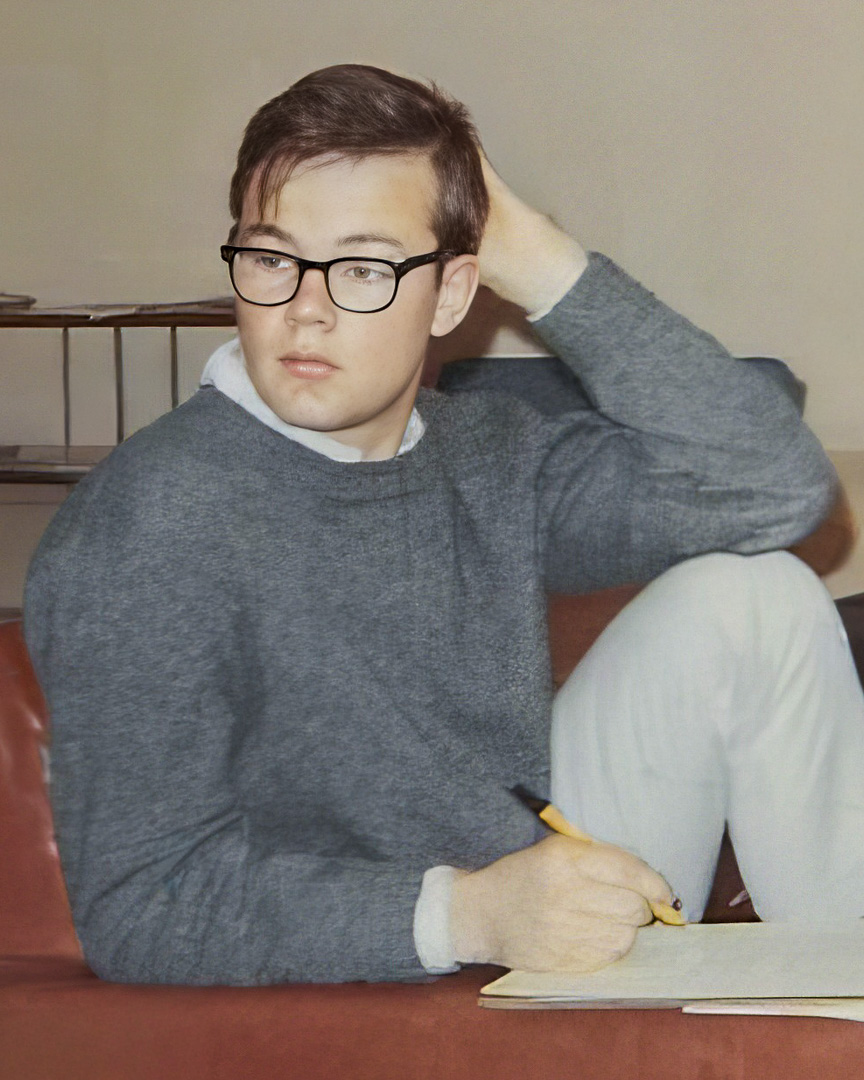
My possibly becoming a novelist is perhaps best told through a story, a strange story remembered as best I can, about a D-grade I received on a college essay I wrote for Professor Oscar Daub’s American Literature course.
I was an English major, not because I was an avid reader as a kid but because I wasn’t.
I liked hearing stories, enjoyed telling them, and scribbled some out even as a child. But no one, including my always distracted self, encouraged me to read. So why not choose a major where I could throw myself into the literary world of storytelling, see if studying the imagination of writers might uncover some talent in me, and maybe point me to a post-college job as some sort of writer.
P rofessor Daub was not someone I would have imagined as a role model for inspiring me to be a writer. This was the late 1960s at a small Evangelical (lots of Baptists) college in the gentrified North Shore of Massachusetts, where like-mindedness prevailed, where students were white, straight (presumably), non-controversial, and formulaic about God’s perfect plan for one’s life. All good-hearted young folks, lifelong friend types, but not exactly inspiring for stories.
And there, amidst that homogeneous community, was Oscar: rotund, effeminate, politically liberal, Episcopalian, free-thinking, witty, and sometimes cryptic — in all, a misfit and a disrupter. He was mostly accepted — more tolerated — as a “character,” as an oddity by the college community. But a small band of nonconformist students hung out with him; a few professors were friends. They liked his cleverness, intellect, honesty, and his stories. A professor once told me that the minutes Oscar wrote for faculty meetings read like a play, replete with the drama of personalities and plot.
Though I was tethered to the College’s culture of conformity, I slowly realized that I was drifting outside the circle.
Rather than looking out at “the world,” as Evangelicals label life beyond their God-saved community, I started to explore, doubt, challenge, and wonder why people acted the way they did. The world did not intimidate me, it fascinated me.
All of that backfill sets up the story of “The D.”
Professor Daub had given the class an overnight assignment to craft a two-page essay about an Emily Dickinson poem. I forget which poem it was but I do remember that I was taken by its simple — note the word, “simple” —reflection on life in only 14 lines. So, I titled my essay something like “The Existential World-View of Emily Dickinson.” I was impressed by the quality of writing and persuasion in my first draft, edited it lightly, and turned it in the next day’s class.
The day after that, Dr. Daub returned our essays with a grade posted at the top and his commentary throughout. All that was written on my two-pager was a large, red “D” and the words, “See me!” I hung back after the class was dismissed, somewhat anxious, not really angry, but expecting that I was about to experience something awkwardly eye-opening.
In so many words, as I remember, Dr. Daub asked where I got off expounding philosophically on a short poem about the worldview of Emily Dickinson in two pages.
I had no response; none was expected. He continued by instructing me to write my thoughts on just the last two lines of the poem. Nothing big picture, nothing highbrow. Do that, he said, turn it in tomorrow and he would reconsider my grade.
O ff I ambled, dispirited, to the coffee shop to quiet the clatter in my head. I read the two lines of poetry over and over, admitted I was baffled by their meaning, mentally sketched a theme and approach for a new essay, tossed out both, then sauntered back to my dorm room to sit uninspired and pained by the new assignment.
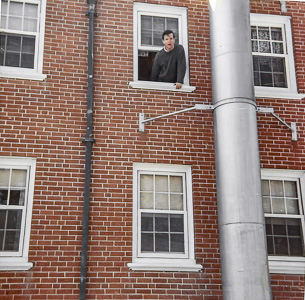 And then I got it. If I was just sitting and talking with Emily Dickinson about what I thought of those lines, I said to myself, what would I say and how would I say it? I wouldn’t try to impress her; that’s what I did in my first essay. I would simply talk out what images entered my mind and what feelings flowed through me when I first read the lines. The two lines slowly became my words, my thoughts, my experience. I was telling myself a story inspired by a storyteller.
I was finally ready to write but not rapidly or fluently, but rather raggedly, more like scratchings than coherent sentences. My chatty, imprecise words started to make sense after a while. Hours later and after a morning rewrite, I found myself smiling slightly from the satisfaction of understanding what Dr. Daub was after. I had migrated into the world of imagination and storytelling. I wouldn’t be leaving there.
I submitted the paper. Dr. Daub smiled; maybe it was a smirk. The next day he returned my work with what I believe was an “A-.” He didn’t have much to say. His few words and expressions said, “You get it now, don’t you?”
A few weeks later, he shocked me again by asking me to consider becoming his Teaching Assistant. I was flattered, took a couple of days to consider the offer, and declined reluctantly for two reasons, only one of which I told him. I said I was running for Student Body President and thought I was likely to win; my time would be limited. What I didn’t tell him was that I still wasn’t ready to undertake the painstaking, intimidating work of the creative process.
I became Student Body President, which matched my personal style and social talents and went on to a career in corporate communication.
I did not become a novelist.
Got time for more ramblings?
Zipper Down
2 min read
In her final hours, as she lay in her hospital bed, in and out of consciousness, surrounded by a gaggle of family members, my always smiling mother-in-law said something softly to me that got the room laughing loudly.


Shabby Kim
3 min read
My friend Kim didn’t offer much as a kid, even as a young adult. She wasn’t all that pretty, couldn’t sing well, and was much too timid. At least that’s what she told herself and why she read “The Littlest Angel” over and over.
Last Meal Out
3 min read
Natalie smiled constantly as she listened to the stories and hilarity of relatives and friends gathered near her. She was one of them but did not participate. Ninety-three years of joys and challenges and sadness had run their course. My mother was now dying. And then she got up and went out for Sunday dinner and grocery shopping.

All Bets Off delves into the common backstory and connected final chapter of two disoriented seniors.
8 min read
Wild Rice Wild steps through 24 hours in the beleagured life of someone with both an awkward problem and a harsh memory.
32 min read
For children comes a wonderfully silly story about, Stella Spoonbill Takes a Bath who realizes she needs a bath for the first time.
10 min read
Payback Kiss
2 min read
My mother broke her foot back in the early ’50s when she had two young children, when my father was off to sea with the Navy, when money was tight, when we lived on the top floor of a double-decker house, and when we didn’t have a car. My mother was alone and trapped and reluctant to seek help. Then comes the really good part of the story.